

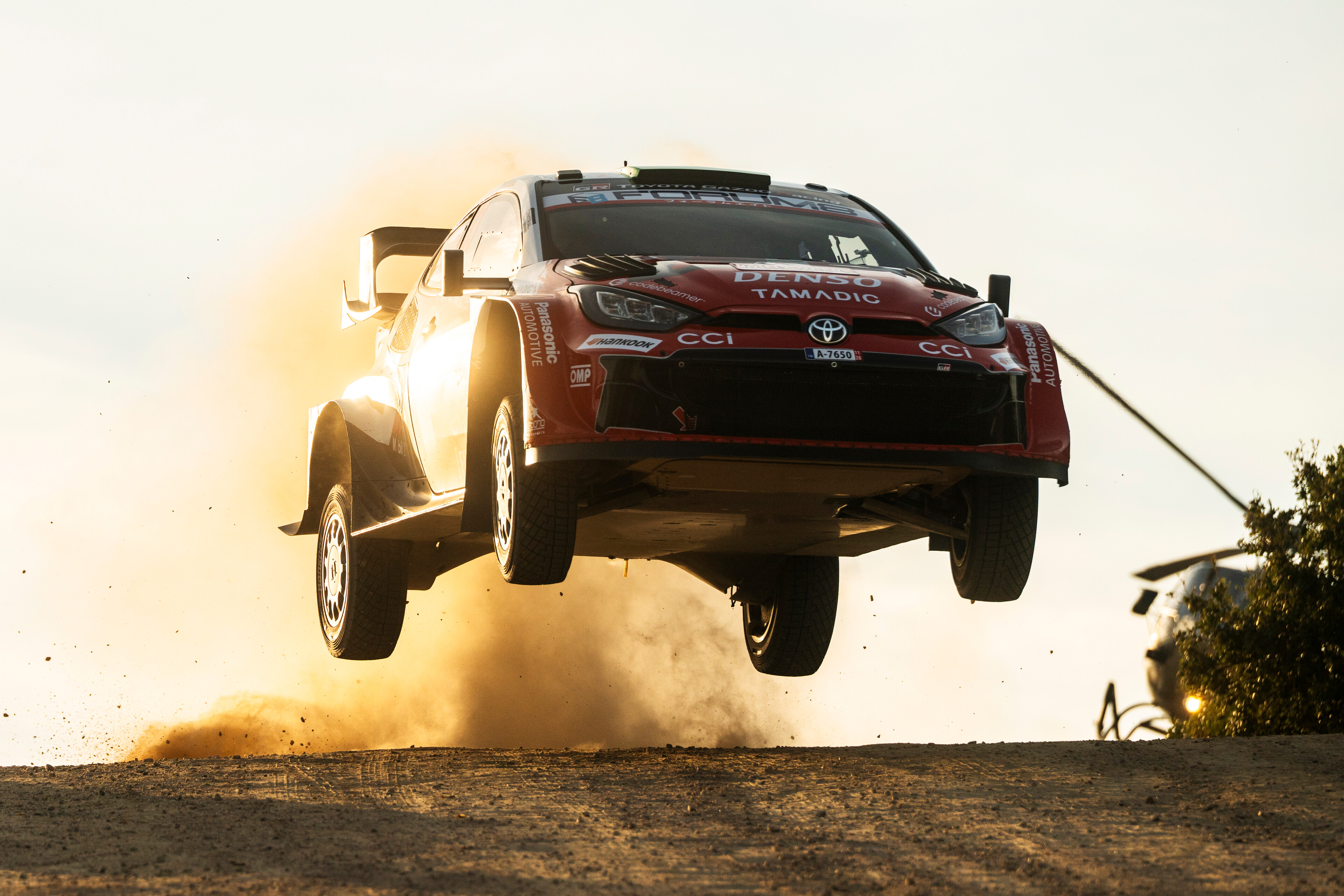
With the 2026 WRC season concluding at Rally Italia Sardegna on Oct. 4, an entire new set of vehicle regulations is set to change the FIA’s rally scene. So, what’s new?
The 2026 season ended with a glamorous fight on the dirt and gravel of Sardegna. Toyota driver Oliver Solberg and co-driver Elliot Edmondson crashed just two corners away from the finish line during the final Wolf Power Stage, handing the historic championship victory to Toyota teammates Elfyn Evans and Scott Martin. This marks the first time since Richard Burns in 2001 than an English pair wins the driver’s championship.

Toyota has also won the constructor’s championship for the sixth year in a row, dominating with 554 points. This era of the WRC has seen near-total Toyota supremacy, and a contributing factor to this is the lack of much external competition.

However, in the upcoming season, a thorough revision of the regulations is set to shake up the field. Current Rally1 cars have price tags well exceeding a staggering €1 million mark, while the WRC27 rules aim to bring this cost to roughly €345,000. This huge reduction in cost is due to a great deal of “de-modernization” within the cars. Current Rally1 cars utilize a custom spaceframe with a complex, mandatory 100kW plug-in hybrid unit, while WRC27 will move to a simpler chassis utilizing cost-effective Rally2 mechanical components (such as the 1.6-litre turbocharged 4-cylinder engine, transmission, and suspension), with hybrid/electric power made optional rather than mandated. In addition, current Rally1 engines output around 380–500+ hp with hybrid boost. WRC27-spec cars will run a 33mm turbo restrictor (delivering just over 300 hp) to maintain a performance margin over standard 290-hp Rally2 cars sharing the top class.
On the contrasting edge, while the cars are set to become more restricted power wise, vehicle design is set to become much more flexible. Current Rally1 body shapes closely mimic production road cars. WRC27 introduces reference-volume dimensional boxes granting constructors freedom for bespoke or production-inspired shapes with simplified, cost-limiting aero.

However, the biggest change coming to the WRC is not about the cars themselves, but instead about who is allowed to compete. Current WRC regulations only allow major automotive manufacturers to enter, while WRC27 broadens the definition to general “constructors.” This will allow specialist engineering firms and independent tuners (like Project Rally One) to compete alongside factories like Toyota Gazoo Racing, Hyundai Shell Mobis World Rally Team, and Ford M-Sport World Rally Team.

These new WRC regulations bring a strong promise to revive a dying breed of motorsport. Long gone are the glorious days of Group B, Group A, and early 2000s WRC, but this new set of rules brings hope for the sport.
The conversation
Comments
Be the first to join the conversation.